


+1 (800) 387-7029 Local: (905) 738-4017
SaunaFin has been a leading provider of luxury saunas in North America since 1962. Today, we continue to pride ourselves on our commitment to quality products and exceptional customer service, using only top-of-the-line materials, offering competitive pricing, and providing a range of customizable saunas & steam baths.
Our approach to home saunas starts with first-hand experience. We connect with homeowners, renovators, builders, and other industry professionals to understand the needs of our customers, enabling us to focus on a project as a whole as well as the most intricate details.
SaunaFin is North America’s largest and most trusted retailer of all things sauna. Along with thousands of residential saunas, SaunaFin has supplied saunas and steam baths in some of the most renowned locations around in Canada and the United States, from the Palazzo Hotel Casino and M Resort Casino in Las Vegas to the Rogers Centre, Casino Rama, Casino Windsor and many more.
1962
Manufacturing for Over 60 Years
50-100
Saunas a Year Installed Locally
100+
Product
Selections
2000+
Saunas Sold Internationally

















"The" Trusted Brand For Over 60 Years

Types of Saunas We Carry

Health Benefits
At SaunaFin, we continue to pride ourselves on the quality of our materials, our commitment to customer service and our ability to provide both at competitive prices. Your Sauna. Your Way.
Two Things: Our physical showroom and exceptional customer service.
We have first-hand experience with all the minute details and we understand the thought process that goes into planning how the sauna fits into new construction or renovation plans.
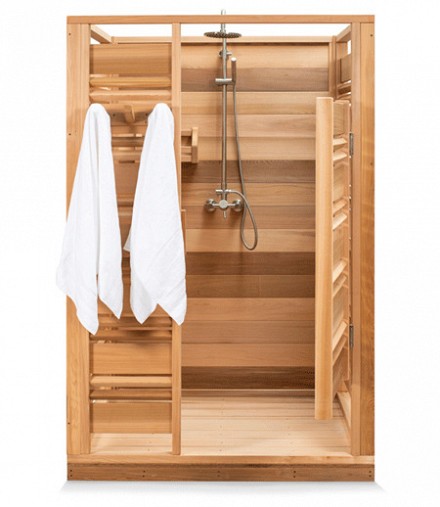
We meet daily with homeowners, renovators and custom home builders. We have seven saunas and a steam shower on display and are the largest retailer of home saunas in Canada, and one of the largest in North America. We have continuous hands-on interaction with our customers and we discuss in detail the various items and options we offer.
Along with our thousands of residential saunas, Saunafin has supplied saunas and steam baths in the Palazzo Hotel Casino and M Resort Casino (Las Vegas), Rogers Centre (formerly Skydome), Casino Windsor, Casino Rama, Toronto Blue Jays and the Ottawa Senators. We are a specified contractor for the YMCA, LA Fitness, and Movati Fitness. We have been featured on HGTV's "Holmes on Home's" and "Rock the Block". Our years of installing home saunas have provided us with a wealth of practical experience. We use this experience to help you plan your sauna and provide a comprehensive and easy to install sauna kit.
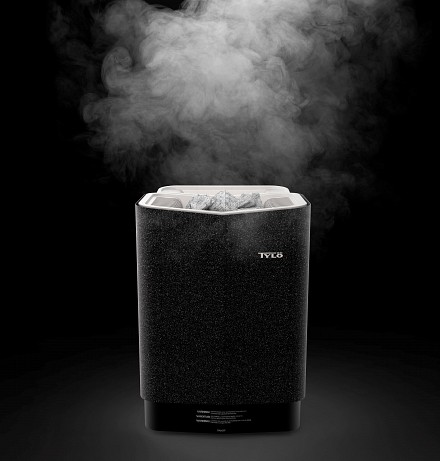
We manufacture our own line of sauna heaters, which are sold under the Sauna Craft brand name. We are also the Canadian distributor and the largest North American provider for the highly regarded TYLO sauna heaters manufactured in Sweden. In addition, we carry the Finnish made SAAKU model heaters provided to us exclusivley by TYLOHELO Inc. Our team offers both online and in person support over the phone, or in our showroom, to help you throughout the process so you can build your sauna, your way.
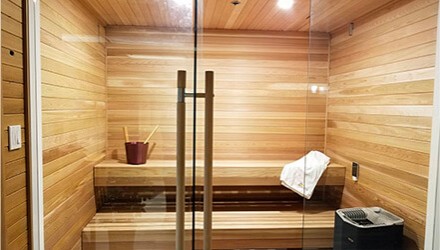
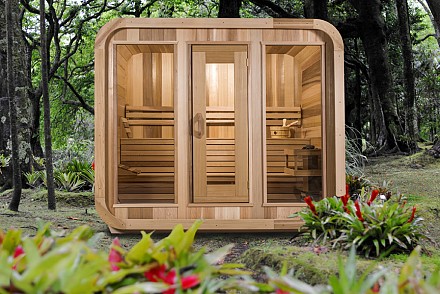
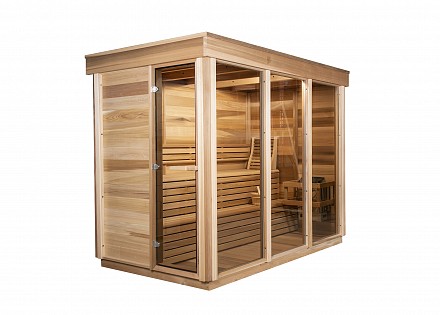
Saunafin offers all three - traditional (hot rock and water), steam bath (steam generator) and infrared. The benefits can be achieved with each. Which type is best suited for you is a personal decision. Your decision might be influenced by health concerns, your preference, social aspects, home decor plans, a certain exercise regimen and/or space restrictions.
Traditional saunas provide a more intense environment with extreme temperatures and blasts of hot steam from splashing the rocks. For many, this is what a true sauna is all about and it is something they desire and appreciate.
There are now also traditional saunas that provide the option of a milder experience. TheTylo Sense Combi sauna heater has a built-in steam reservoir. The Tylo "Soft Sauna" with lower temperatures (around 60°C/140°F) and higher humidity (40-50%) is a unique sauna experience.
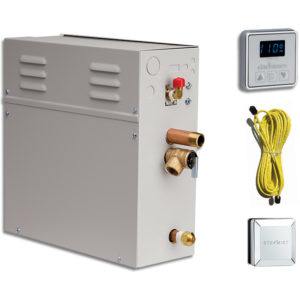
steam baths or steam showers are known in some parts of the world as a Turkish bath or hammam. Steam is usually added to a new or renovated shower. Often installed in a master bath or as part of a finished basement. The steam bath/shower approach provides lower overall temperatures (110-120°F. vs. 185-195°F) and higher humidity (70-100% vs. 10-30 %) as compared to a sauna. The higher humidity is a milder environment. Many prefer the steam bath experience. Others select steam because it can be added to a shower, so no additional space is required.
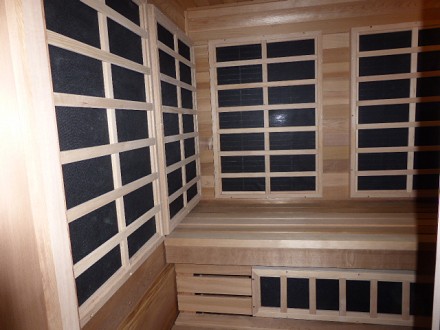
Infrared saunas offer a modern twist to an age-old experience. IR heaters (emitters) use infrared radiation to heat the body directly without heating the air. The body takes in the infrared rays and absorbs them. An individual can sweat at a lower temperature compared to a traditional sauna (100-120°F). While we do not subscribe to many of the over-the-top claims from some infrared sauna vendors, there is certainly a market for infrared. Most Infrared saunas are 120-volt plug-n-play pre-fab cabins mass produced overseas. Being such turnkey products has led to multitudes of infrared sauna companies. It is for that very reason that we do not carry such pre-fab infrareds.
We focus exclusively on installed infrared heaters and kits for field installation as part of a renovation. Our infrared is designed to be installed as a permanent structure. We carry one of the few or the only ETL approved field installed infrared heater packages
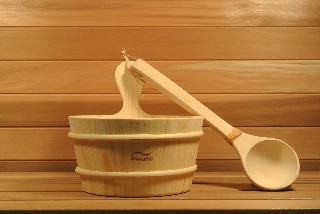
There has always been confusion around the various adjectives applied to saunas: dry sauna, wet sauna, steam sauna, rock sauna. We prefer the name Traditional Sauna. In a nutshell, a traditional sauna is a basically dry environment, with momentary bursts of humidity when water is splashed on the rocks. Ambient sauna humidity is around 10%, far below the 30-40% that is found in most homes. Splashing water on the rocks will spike humidity to 60-70% for a few seconds only, resulting in the wave of heat that comes off the rocks. To add to the confusion, the infrared industry has taken to calling their product a dry sauna. We say the very same traditional sauna heater is both wet and dry. The sauna basically bakes the air inside the room (dry) and splashing water on the rocks (in moderation) is part of the sauna experience (wet).
Similarly, the term steam sauna is used by some to refer to a traditional sauna and by others to describe a steam bath. We at Saunafin avoid the using of the term steam sauna. It just leads to confusion. The terms you will hear us say are traditional or rock sauna, steam bath or steam shower and infrared sauna.
The benefits of steams baths and saunas are well-known and documented. From stress relief and relaxation to soothing tired muscles, saunas have many health benefits related to "induced fever" and detoxification. These benefits can be realized by the use of different types of rooms.
First and foremost, saunas and steambaths should be viewed as leisure products. They provide a relaxing and enjoyable environment to help you kick back and unwind. A place to find peace of mind, relaxation, and contentment. In other words, a way to deal with daily stress with a smile on your face. As a bonus, saunas are reputed to offer a number of health benefits.
Warmth helps to alleviate pain as blood vessels increase in size and circulation. Increased circulation lets larger amounts of oxygen make it to the injured parts of your body. This helps reduce pain and speed up the healing process.
Sweating is altogether part of the intricate thermoregulatory system of your organs, that intensifies metabolic and heart rate, as well as cardiac output. This overall process needs a lot of energy and diminishes extra moisture, fat, and salt. Naturally, the body releases toxins and fats that are water soluble.
A 10 to 20 minute session in a sauna can increase your heart rate by 75% if you exercise in it. This increased heart rate is similar to going on a fast walk. This provides the same metabolic result as physical exercise. There is a known effect on your blood pressure as warmth forces vessels to grow larger in order to accommodate the heightened flow of blood.
We all sweat. Sweat is mostly water. Sweating is a way to cool the body. But in the heat of a sauna, the core body temperature begins to rise. Many doctors claim that extensive sweating during sauna use can decrease amounts of zinc, mercury, lead, nickel, and copper.
Please, enter a valid value